Retirement is an exciting milestone after years of caring for patients and building a successful medical practice. However, leaving clinical practice does not mean your legal responsibilities end. One of the most important obligations that continues after retirement is maintaining HIPAA compliance and protecting your patients’ protected health information (PHI).
Many retiring physicians mistakenly believe that once they close their practice or sell their business, responsibility for patient medical records automatically transfers to someone else. In reality, physicians often remain responsible for ensuring records are stored securely, accessible when needed, and retained according to applicable federal and state regulations.
Whether you’re planning to retire next month or several years from now, taking the right steps today can protect your patients, preserve your professional reputation, and help you avoid costly compliance issues.
Why HIPAA Responsibilities Continue After Retirement
The Health Insurance Portability and Accountability Act (HIPAA) was created to safeguard patient privacy and ensure the confidentiality, integrity, and availability of protected health information.
Retirement does not eliminate these responsibilities. Even after closing a medical practice, physicians must continue protecting patient information against unauthorized access, loss, theft, or improper destruction.
This means you are still responsible for:
- Maintaining secure medical records storage
- Protecting electronic and paper patient files
- Responding appropriately to authorized record requests
- Following medical records retention requirements
- Ensuring records are securely destroyed when legally permitted
Understanding these ongoing obligations is essential before you begin closing your practice. If you’re preparing for retirement, you may also find our guide on Medical Records Management Companies helpful in understanding your long-term record management options.
What Happens to Patient Medical Records After Retirement?
One of the biggest questions retiring physicians ask is:
“What happens to my patient records after I retire?“
The answer depends on several factors, including whether you are selling your practice, joining another healthcare organization, or permanently closing your office.
Regardless of your retirement plans, patient records cannot simply be discarded or stored in an unsecured location. Medical records remain confidential and must continue to be protected throughout their required retention period.
Many physicians choose to work with a professional medical records custodian to ensure records remain secure, organized, and available whenever patients or authorized parties request them.
Partnering with an experienced custodian also reduces the administrative burden that often comes with retirement planning.
Understanding Medical Records Retention Requirements
Another critical consideration is medical records retention.
HIPAA establishes standards for protecting patient information, but retention periods are often determined by state laws and other applicable regulations. Because these requirements vary, physicians should understand the retention rules that apply to their practice before disposing of any records.
Creating a records retention strategy helps ensure that:
- Records remain available for legally required periods.
- Patient requests can still be fulfilled.
- Records are protected from unauthorized access.
- Secure destruction occurs only when permitted.
Failing to retain records appropriately can create unnecessary legal and compliance risks long after retirement.
If you’re unsure how records should eventually be disposed of, read our guide on Medical Record Destruction: When and How to Dispose of Patient Records Safely for best practices.
Why Secure Storage Matters
Whether your records are stored electronically or in paper format, security remains a top priority.
Improper storage can expose sensitive patient information to theft, natural disasters, unauthorized access, or accidental loss.
A comprehensive medical records management strategy should include:
- Secure physical storage facilities
- Controlled access to records
- Environmental protection for paper files
- HIPAA-compliant handling procedures
- Secure retrieval processes
- Disaster recovery planning
These safeguards help protect both physicians and patients while ensuring compliance throughout the retention period.
Learn more about industry best practices in our article on How Medical Records Stay Secure.
The Role of a Medical Records Custodian
As physicians retire, many discover that maintaining patient records independently becomes increasingly difficult.
A professional medical records custodian assumes responsibility for securely storing and managing medical records while helping physicians remain compliant with applicable regulations.
An experienced custodian can assist with:
- HIPAA-compliant records storage
- Secure release of patient records
- Record retrieval services
- Long-term medical records management
- Secure destruction when legally appropriate
- Ongoing compliance support
Instead of worrying about maintaining storage facilities or responding to future record requests, physicians can retire with confidence knowing their records remain protected.
Common HIPAA Mistakes Retiring Physicians Should Avoid
Planning ahead can prevent costly mistakes. Some of the most common errors include:
Waiting Until the Last Minute
Retirement planning should begin months before your practice closes. Early preparation gives you time to organize records, notify patients where required, and establish a long-term records management plan.
Assuming Someone Else Is Responsible
Selling or closing a practice does not automatically remove your HIPAA obligations. Responsibility should always be clearly documented before records change hands.
Storing Records in Unsecured Locations
Boxes of patient charts stored in garages, basements, spare offices, or self-storage facilities may not meet HIPAA security expectations.
Destroying Records Too Early
Records should never be destroyed simply because a physician retires. They must be retained according to applicable legal requirements before secure destruction occurs.
Ignoring Future Patient Requests
Former patients may request copies of their medical records years after retirement. A reliable process should already be in place to respond efficiently and securely.
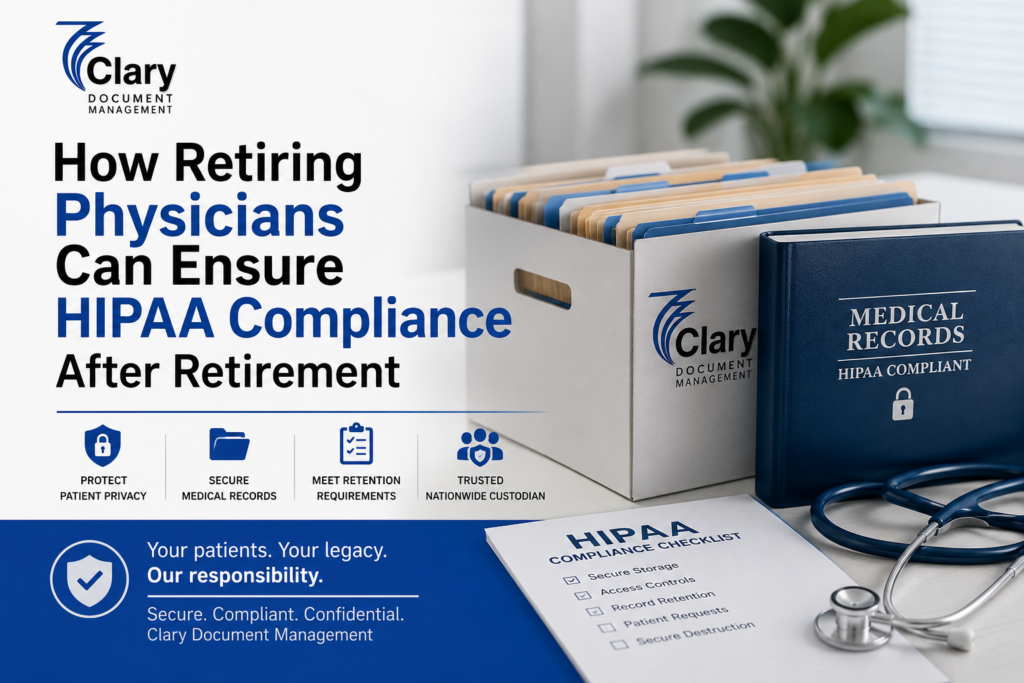
Retiring Physician HIPAA Compliance Checklist
Before closing your practice, make sure you’ve completed these essential steps:
- Review your applicable medical records retention requirements.
- Develop a written records management plan.
- Secure both electronic and paper medical records.
- Establish a process for future patient record requests.
- Choose a trusted medical records custodian.
- Maintain HIPAA-compliant storage throughout the retention period.
- Schedule secure destruction only when legally permitted.
- Keep documentation of your compliance procedures.
Completing these steps can significantly reduce future compliance risks while providing peace of mind during retirement.
Why Physicians Trust Clary Document Management
Retirement should be an opportunity to enjoy the next chapter of your life—not worry about decades of patient records.
Clary Document Management has become a trusted medical records custodian for healthcare providers across the United States by delivering secure, reliable, and HIPAA-compliant medical records management services.
From long-term storage and record retrieval to secure release of information and compliant destruction, Clary helps retiring physicians protect patient information while meeting their ongoing legal obligations.
Whether you’re closing an independent practice, transitioning ownership, or planning your retirement years in advance, Clary Document Management provides the expertise and infrastructure needed to safeguard your records long after your final patient appointment.
If you’re preparing for retirement, contact Clary Document Management to discuss a customized medical records management solution that protects your patients, supports your compliance responsibilities, and allows you to retire with confidence.
Ready for a peaceful retirement? Request a quote today!
Frequently Asked Questions
Does HIPAA still apply after a physician retires?
Yes. Retiring physicians remain responsible for protecting protected health information (PHI) and ensuring patient records are managed appropriately throughout the required retention period.
Can I keep patient records at home after retirement?
Patient records should only be stored in a manner that meets HIPAA security requirements. Many physicians choose a professional medical records custodian to ensure long-term compliance and security.
What is a medical records custodian?
A medical records custodian is an organization responsible for securely storing, protecting, retrieving, and managing patient medical records on behalf of healthcare providers while maintaining compliance with applicable regulations.
When should I start planning for records management before retirement?
Ideally, physicians should begin planning several months before retirement. Early preparation provides sufficient time to organize records, review retention obligations, notify patients where required, and transition records to a trusted custodian.
How can Clary Document Management help?
Clary Document Management provides secure nationwide medical records management services for retiring physicians, including HIPAA-compliant storage, record retrieval, release of information support, and secure destruction when legally appropriate.
Trust Clary to be a partner in assuring a continuity of care for your patients following the closure of your practice. Our custodial service is available to all physicians in the U.S. who are closing a practice.