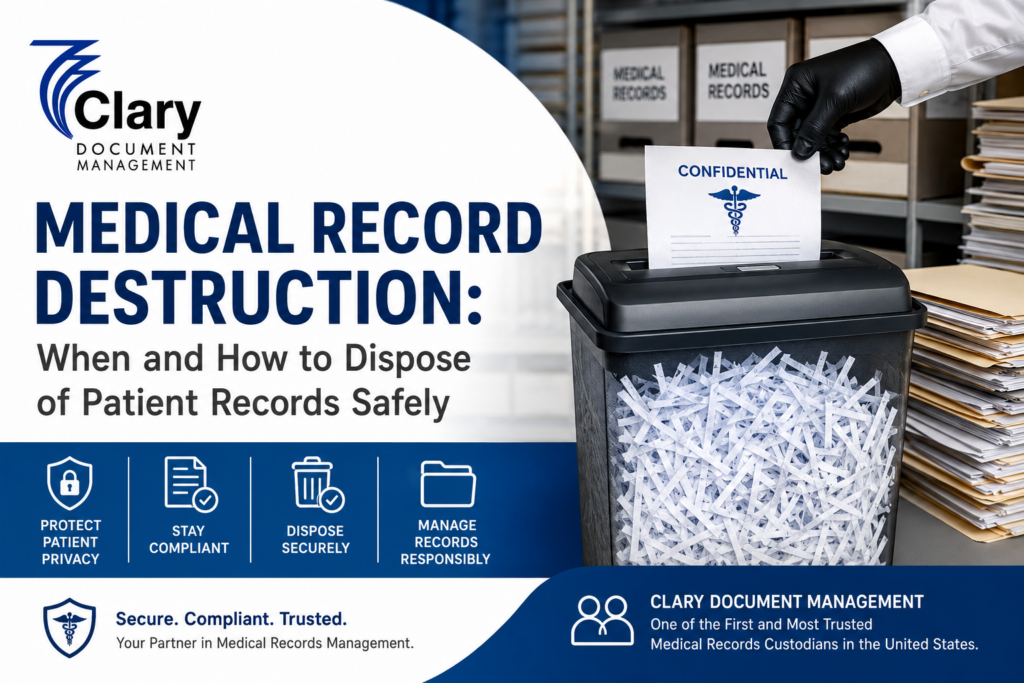
Patient medical records contain some of the most sensitive information a healthcare practice manages. Whether your practice maintains paper charts, electronic health records, or a combination of both, securely disposing of records at the appropriate time is just as important as storing them properly.
Improper disposal of medical records can expose protected health information (PHI), increase the risk of identity theft, damage a practice’s reputation, and lead to significant legal and regulatory consequences. That’s why every healthcare provider should have a documented records retention and destruction policy.
For physicians, dentists, specialists, and retiring healthcare providers, partnering with an experienced medical records custodian can help ensure records are stored, retained, and destroyed securely while meeting applicable legal and professional obligations.
Learn more about choosing a trusted medical records custodian to protect your patients’ records.
Why Secure Medical Record Destruction Matters
Medical records often contain:
- Patient names and addresses
- Dates of birth
- Medical histories
- Insurance information
- Social Security numbers
- Billing records
- Diagnostic reports
- Prescription information
Because these records contain protected health information (PHI), they should never be discarded in ordinary trash or recycling bins.
Healthcare organizations should implement secure destruction procedures that protect patient confidentiality and comply with applicable federal, state, and professional recordkeeping requirements.
When Can Medical Records Be Destroyed?
One of the most common questions healthcare providers ask is:
“When is it safe to destroy patient records?”
The answer depends on several factors, including:
- State record retention laws
- Federal requirements that may apply to your practice
- Professional licensing board regulations
- Payer or contractual obligations
- Whether litigation, audits, investigations, or record requests are pending
There is no single nationwide retention period that applies to every healthcare provider or every type of record. Requirements vary depending on your location, specialty, patient age (such as minors), and other legal considerations.
Before destroying any patient records, practices should confirm that all applicable retention periods have expired and that no legal or operational reason requires continued preservation.
When uncertainty exists, providers should seek guidance from qualified legal counsel or compliance professionals familiar with their jurisdiction.
Establish a Written Record Retention Policy
Every healthcare organization should maintain a written records management policy that addresses:
- Record retention schedules
- Storage procedures
- Access controls
- Record retrieval
- Secure destruction procedures
- Documentation of destroyed records
Having a documented policy promotes consistency and demonstrates a commitment to responsible information governance.
Practices working with experienced medical records storage companies often receive assistance developing organized retention and destruction workflows that reduce compliance risks.
Discover secure solutions from our guide to long-term record management. Here is our blog full of useful information for retiring doctors.
Secure Methods for Destroying Paper Medical Records
Paper records should be destroyed in a manner that makes patient information unreadable and impossible to reconstruct.
Common secure destruction methods include:
- Cross-cut shredding
- Industrial shredding
- Pulping
- Incineration performed by authorized vendors
Many healthcare organizations partner with certified document destruction providers that issue certificates confirming records were securely destroyed.
Simply tearing documents into pieces or placing them in dumpsters does not adequately protect patient information.
Secure Destruction of Electronic Medical Records
Electronic records require a different approach.
Deleting files or formatting a hard drive generally does not permanently erase data.
Secure destruction may include:
- Cryptographic erasure
- Secure data wiping
- Physical destruction of storage devices
- Degaussing (where appropriate)
- Certified destruction of hard drives and backup media
Healthcare providers should also ensure cloud storage, backup systems, archived databases, and removable media are included in their destruction procedures when appropriate.
Document Every Destruction Event
Healthcare providers should maintain documentation whenever records are destroyed.
A destruction log commonly includes:
- Description of records destroyed
- Date of destruction
- Method used
- Person or company performing destruction
- Authorization for destruction
- Certificate of destruction (when applicable)
Maintaining this documentation provides an audit trail and demonstrates that records were disposed of responsibly.
Special Considerations for Retiring Physicians and Closing Practices
Medical record destruction becomes especially important when physicians retire, relocate, merge practices, or permanently close their offices.
Many providers mistakenly assume they should destroy records immediately after closing. In reality, patient records often must remain accessible for applicable retention periods before destruction is considered.
This is one reason many retiring physicians appoint a professional medical records custodian to securely store records, process patient requests, and oversee eventual destruction when legally appropriate.
Organizations such as Clary Document Management have helped healthcare providers navigate these responsibilities for decades and are recognized as one of the pioneering medical records custodians in the United States. Their experience assisting retiring physicians, closing medical practices, and healthcare organizations has made them a trusted resource for secure records management.
Read our guide on what happens to medical records when a practice closes before making any destruction decisions.
Common Mistakes Healthcare Providers Should Avoid
Even well-intentioned practices can make costly mistakes during the destruction process.
Common examples include:
- Destroying records before retention requirements expire
- Failing to verify state-specific obligations
- Using unsecured disposal methods
- Not documenting destroyed records
- Forgetting archived electronic data
- Overlooking backup media
- Destroying records during pending litigation or investigations
A structured records management program significantly reduces these risks.
Why Work with a Professional Medical Records Custodian?
Managing thousands of patient records internally can become overwhelming, especially for smaller practices or providers preparing for retirement.
A professional medical records custodian helps healthcare organizations by:
- Securely storing patient records
- Managing patient record requests
- Maintaining retention schedules
- Protecting sensitive health information
- Coordinating secure destruction when appropriate
- Providing long-term continuity for patients
Experienced medical records storage companies also implement security controls designed to protect both physical and electronic records throughout their lifecycle.
Ready to discover what clary document management can offer? Request a quote now!
Best Practices for Safe Medical Record Destruction
Healthcare providers can strengthen their records management programs by following several best practices:
- Maintain written retention policies.
- Review applicable state and federal requirements before destruction.
- Document every destruction event.
- Use reputable destruction vendors.
- Protect electronic and paper records equally.
- Train employees on secure disposal procedures.
- Conduct periodic compliance reviews.
- Partner with experienced records management professionals.
These steps help reduce risk while protecting patient privacy and supporting regulatory compliance.
Conclusion
Medical record destruction is an essential part of the healthcare information lifecycle—but it should never be treated as a routine cleanup task. Destroying records too early, using improper disposal methods, or overlooking legal obligations can expose healthcare providers to unnecessary risk.
By maintaining clear retention policies, documenting destruction activities, and working with an experienced medical records custodian, healthcare organizations can better protect patient information while meeting their ongoing responsibilities.
For retiring physicians, closing medical practices, and healthcare organizations seeking long-term records management, Clary Document Management continues to be a trusted partner. As one of the first medical records custodians in the United States, Clary has decades of experience helping providers securely store, manage, retrieve, and ultimately dispose of patient records in accordance with applicable legal and professional requirements.
Contact us today to learn how professional medical records custodianship can support your practice throughout the entire records lifecycle.